Fair and Competitive Heating Service Quotes: What to Know
When it comes to How Do I Know if My Heating Service Quote Is Fair and Competitive?, fair heating quotes include a written breakdown of labor, equipment, and permits, matching the scope discussed during inspection. Since 2004, Young’s Heating and Cooling has served Kennewick, Pasco, and Richland homeowners with transparent, itemized pricing. Comparing multiple quotes, verifying licensing, and questioning vague line items reveal whether a number reflects honest work or inflated markup.
What makes a heating quote fair?
A fair heating quote breaks down costs for equipment, labor, and materials rather than presenting a single lump sum. Homeowners who receive itemized estimates can compare apples to apples across contractors and spot hidden charges before signing. Without this transparency, a low bottom-line number often hides cheap components or rushed labor that fails within months.
What should a transparent estimate include?
Young’s Heating and Cooling provides clear estimates that spell out exactly what each dollar covers. The team emphasizes honest communication so homeowners understand the scope of work, the brand of equipment being installed, and the labor required. A quote that lacks this detail leaves room for surprise fees after the job starts.
How does technician training affect pricing?
Fair pricing reflects the technician’s expertise, not just the lowest possible cost. Young’s Heating and Cooling employs highly trained, NATE-certified technicians who bring verified skills to every job. Homeowners pay for the confidence that the work meets industry standards the first time.
Does a satisfaction guarantee matter?
A fair quote should include a a notable share satisfaction guarantee that protects the homeowner if the work falls short. Young’s Heating and Cooling backs every service with this guarantee, giving customers recourse without additional expense. Without it, the homeowner shoulders all the risk if the repair fails or the installation underperforms.
What a fair quote includes
What a vague quote hides
Itemized equipment, labor, materials
Single bottom-line number
Technician credentials (NATE certification)
No mention of training
Satisfaction guarantee
No warranty or recourse
Clear scope of work
Ambiguous “miscellaneous” fees

How do I compare multiple quotes?
Comparing multiple heating service quotes side-by-side reveals pricing outliers and shows what each contractor actually includes for the money. Homeowners who stack bids next to each other can spot when the lowest price skips important steps or when the highest price adds genuine extras.
What should a homeowner check beyond the dollar amount?
Company reputation tells a story that numbers alone cannot. Professional and experienced companies generate positive reviews across a variety of past jobs, which provides real evidence of consistent work quality. A low quote from a company with poor feedback usually costs more in the long run when repairs or callbacks become necessary.
Technician credentials separate a fair quote from a risky one. Certified technicians signal that the company invests in ongoing training and rigorous standards. Look for NATE certification — a widely recognized mark of advanced expertise in the industry.
Comparison factor
What to look for
Why it matters
Reputation
Consistent positive reviews across different job types
Signals reliability and customer care
Technician credentials
NATE certification
Indicates advanced training and professional standards
Brand recognition
Industry awards and community honors
Reflects local trust and proven performance
Brand honors offer another layer of assurance. Young’s Heating and Cooling has earned awards, but the specific 2025 Readers’ Choice honors from the Union‑Bulletin and Tri‑Cities Best awards are not mentioned in the provided sources. These awards show the company holds strong community trust — a useful benchmark when weighing multiple quotes.
How can a homeowner verify if a company’s reputation matches its quote?
Reading a mix of recent and older reviews helps homeowners see whether service quality stays consistent over time. Look for reviews that mention specific job types — repairs, replacements, or installations. To confirm the company handles the exact kind of work needed. A pattern of positive feedback on similar projects supports the quoted price as fair.
What should a quote include?
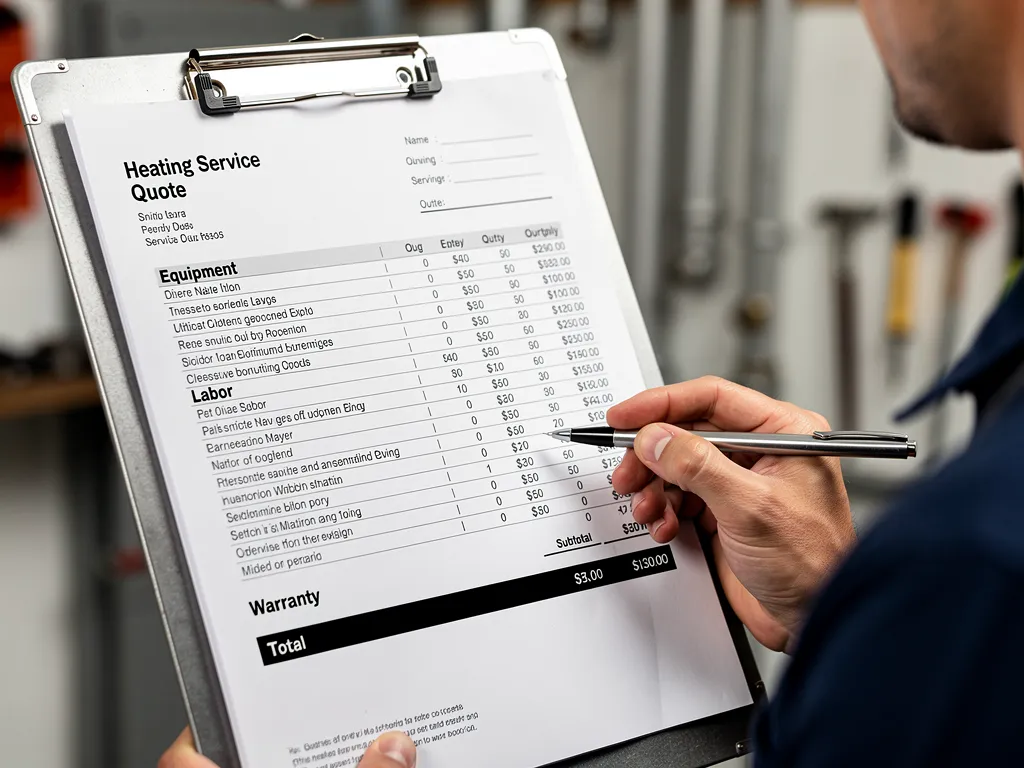
A fair heating service quote must break down exactly what a homeowner pays for, not just present a single bottom-line number. The document should specify the equipment brand, model, and efficiency rating rather than hiding those details behind a lump sum. This level of transparency lets customers compare apples to apples across multiple bids.
What line items belong on a heating quote?
Equipment specifications – Brand name, model number, and SEER or AFUE efficiency rating for every component
Labor costs – A separate line showing installation or repair labor, not buried inside equipment pricing
Material costs – Any parts, refrigerant, ductwork, or fittings itemized individually
Permit fees – Local permit costs listed as their own charge when required by code
Warranty terms – Manufacturer parts warranty duration and contractor labor warranty clearly stated
Equipment specifications – Brand name, model number, and SEER or AFUE efficiency rating for every component
Labor costs – A separate line showing installation or repair labor, not buried inside equipment pricing
Material costs – Any parts, refrigerant, ductwork, or fittings itemized individually
Permit fees – Local permit costs listed as their own charge when required by code
Warranty terms – Manufacturer parts warranty duration and contractor labor warranty clearly stated
How does warranty information protect the homeowner?
Warranty details separate a thorough quote from a vague one. The document should state how many years the manufacturer covers parts and how long the contractor guarantees labor. Young’s Heating and Cooling includes these terms upfront so clients know exactly what protection comes with the installation.
Why should rebates and financing appear on the quote?
Exclusive rebates and financing options reduce the real cost of a heating system. Only if the homeowner knows about them. A complete quote discloses available discounts and payment plans so customers see the total savings before making a decision. Young’s Heating and Cooling lists these customer-friendly options directly on the estimate, giving homeowners a clear picture of affordability from the start.
How do I avoid overpaying?

Avoiding overpayment on a heating service quote requires a structured approach that starts with gathering multiple estimates and understanding the market range. A full HVAC replacement runs anywhere from $5,000 to $28,000 nationwide, including equipment and labor, depending on system type and home size. Homeowners who skip this comparison step risk paying well above the local average for identical work.
What should homeowners watch for in a low quote?
A quote that falls significantly below others in the area should raise caution, not excitement. The cheapest option often cuts corners on equipment quality, skips necessary installation steps, or uses untrained labor. These shortcuts lead to higher energy bills, frequent breakdowns, and premature system failure. Costs that far exceed any upfront savings.
How does a satisfaction guarantee protect against overpayment?
Young’s Heating and Cooling backs every job with a a notable share satisfaction guarantee, which removes the financial risk of paying for poor workmanship. cite-3 If the service does not meet expectations, the company makes it right at no additional cost. This guarantee shifts the burden of quality assurance from the homeowner to the service provider.
Why does in-house fabrication matter for pricing?
Companies with in-house sheet metal fabrication — like Young’s Heating and Cooling — avoid subcontractor markups that inflate final bills. When a contractor outsources ductwork or custom parts, those costs pass directly to the homeowner with a middleman fee attached. In-house capabilities keep pricing transparent and competitive.
Steps to avoid overpaying on a heating quote:
Collect at least three written quotes from licensed, insured contractors
Compare equipment brands, SEER ratings, and warranty terms — not just the bottom line
Ask whether the company performs all work in-house or subcontracts portions
Verify the company offers a satisfaction guarantee before signing
Request a breakdown of labor, materials, and permit fees in writing
Collect at least three written quotes from licensed, insured contractors
Compare equipment brands, SEER ratings, and warranty terms — not just the bottom line
Ask whether the company performs all work in-house or subcontracts portions
Verify the company offers a satisfaction guarantee before signing
Request a breakdown of labor, materials, and permit fees in writing
When should I get a second opinion?
A second opinion becomes essential when a homeowner receives a quote that feels unusually high or low compared to expectations. Getting wildly different quotes for the same heating repair or replacement signals that something needs verification. A second opinion helps confirm whether the price is fair and whether the recommended work is actually necessary.
What makes a second opinion worth the time?
An honest, trustworthy company provides an honest, trustworthy quote. When the recommended repair or replacement carries a significant cost. The diagnosis remains unclear, a second opinion protects the homeowner from unnecessary expenses. Homeowners should trust their instincts. If a contractor pressures an immediate decision or refuses to explain the quote line by line, that behavior raises a red flag. A reliable contractor listens to concerns and explains the reasoning behind each recommendation.
How does Young’s Heating and Cooling make getting a second opinion easy?
Young’s Heating and Cooling supports homeowners with convenient phone. Online scheduling, allowing customers to book a second evaluation without delay. The team provides clear estimates that break down the work and costs, making comparison straightforward. This approach gives homeowners the confidence to compare options side by side before committing to a major heating investment.
Compare at least three quotes before making a final decision on any heating repair or replacement.
Ask each contractor to explain why the specific repair or replacement is needed and how the price breaks down.
Watch for pressure tactics — a contractor who demands an immediate signature or refuses to put the quote in writing should raise concerns.
Compare at least three quotes before making a final decision on any heating repair or replacement.
Ask each contractor to explain why the specific repair or replacement is needed and how the price breaks down.
Watch for pressure tactics — a contractor who demands an immediate signature or refuses to put the quote in writing should raise concerns.
Getting a fair heating service quote comes down to understanding what you’re paying for and trusting the expertise behind the estimate. By comparing multiple quotes, asking the right questions, and verifying credentials, you gain confidence in your decision. A reputable heating contractor stands behind their work with clear communication. Transparent pricing—hallmarks of professional service that protect your home’s comfort and your investment for years to come.
FAQ
What details should a fair heating quote include?
A fair quote itemizes equipment, labor, and materials, along with technician credentials, a satisfaction guarantee, and a clear scope of work matching the inspection discussion.
Why does NATE certification matter when evaluating a quote?
NATE certification signals a technician’s verified expertise. The company’s investment in rigorous training, giving homeowners confidence the work meets industry standards the first time.
What should homeowners do when comparing multiple quotes?
Stack bids side-by-side to spot pricing outliers, check company reviews for consistent quality, and verify licensing to confirm the price reflects honest work, not inflated markup.
Facts
Young’s Heating and Cooling is located in Kennewick, WA, United States.
Young’s Heating and Cooling is located in Kennewick, WA, United States.
Conclusion
A fair heating service quote never leaves a homeowner guessing. It spells out equipment, labor, materials, and permits; it names the technician’s credentials; and it backs the work with a satisfaction guarantee. When you compare bids side-by-side, question any vague “miscellaneous” line, and watch for pricing that’s suspiciously low, you put yourself in control of the decision instead of hoping the number is honest. Young’s Heating and Cooling has built its reputation in Kennewick, Pasco, and Richland on exactly this kind of transparency — itemized estimates, NATE-certified technicians, and in-house fabrication that keeps costs predictable. Trusting your instincts, asking direct questions, and getting a second opinion when something feels off will always serve you better than accepting the first number you’re handed.