
Top Signs Your Commercial Boiler Needs Immediate Repair or Replacement: A Comprehensive Guide

Commercial boilers keep spaces comfortable and efficient but can fail like any mechanical equipment. Spotting repair or replacement signs early prevents downtime and protects occupants. This guide highlights the main warnings, when replacement makes sense, maintenance priorities, and basic troubleshooting to help evaluate services from Youngs Heating and Cooling.
What Are the Most Common Signs Your Commercial Boiler Requires Immediate Repair?
Early detection preserves safety and efficiency. Pay attention to unusual noises, visible leaks, and pressure changes; addressing these promptly limits damage and risk.
- Unusual Noises: Banging, whistling, or gurgling often means air in the system, sediment, or loose parts.
- Leaks: Pooling water or drips usually indicate corrosion, failed seals, or a damaged component.
- Pressure Issues: Low or fluctuating pressure suggests a leak or a faulty pressure-relief valve and reduces heating performance.
For businesses in Walla Walla, WA, Youngs Heating and Cooling provides commercial boiler repair and replacement to keep systems safe and efficient.
How Does Boiler Pressure Indicate Repair Needs?

Pressure is critical. Most commercial boilers operate near 12–15 psi. Low pressure causes poor heating; high pressure often means a faulty relief valve. Regular pressure checks help catch issues before they turn into failures.
What Do Unusual Noises and Leaks Reveal About Boiler Health?
Noises commonly indicate trapped air, sediment, or loose components. Leaks point to corrosion or failing seals and can cause water damage if ignored. Repair these issues early to avoid larger failures.
When Should You Consider Replacing Your Commercial Boiler?
Replacement decisions hinge on age, efficiency, and safety. The right timing can lower long-term costs and improve energy performance.
- Age of the Boiler: Most commercial boilers last roughly 15–30 years. Older units are candidates for replacement.
- Efficiency Concerns: Declining efficiency and rising fuel costs can justify an upgrade to a newer model.
- Safety Issues: Repeated breakdowns or safety hazards (for example, carbon monoxide risks) are strong signals to replace the unit.
Youngs Heating and Cooling can evaluate your system and recommend repair or replacement based on cost and safety.
How Does Boiler Age Affect Replacement Decisions?
As boilers age they lose efficiency, become harder to service, and may not meet current safety standards. If yours is over about 20 years old, schedule a professional inspection to review replacement options.
What Efficiency and Safety Factors Signal Replacement Necessity?
Frequent repairs, low efficiency ratings, persistent pressure problems, or any confirmed carbon monoxide issue favor replacement. Newer systems typically use less fuel and reduce operating costs.
What Are Common Maintenance Issues That Impact Commercial Boiler Performance?
Regular maintenance prevents efficiency loss and safety risks. Simple preventative steps avoid many major problems and extend equipment life.
Prioritizing Industrial Boiler Maintenance for Efficiency
As a result, energy-efficiency practices (EEPs) such as condensate reuse, maintenance and repair of steam traps, insulation of steam boilers, and upkeep of distribution systems were identified as priority measures. By contrast, heat recovery from waste flue gases, economizer installation, and heat recovery from blow down ranked lower. The results showed prevention-oriented practices were higher priority than pollution control and recovery practices.
Selection of priority energy efficiency practices for industrial steam boilers by PROMETHEE decision model, E Ozturk, 2021
- Routine Inspections: Scheduled checks find issues before they escalate.
- Cleaning Procedures: Removing dirt and scale preserves heat transfer and efficiency.
- Safety Checks: Verifying valves, controls, and combustion prevents hazards.
Which Maintenance Checks Prevent Emergency Repairs?
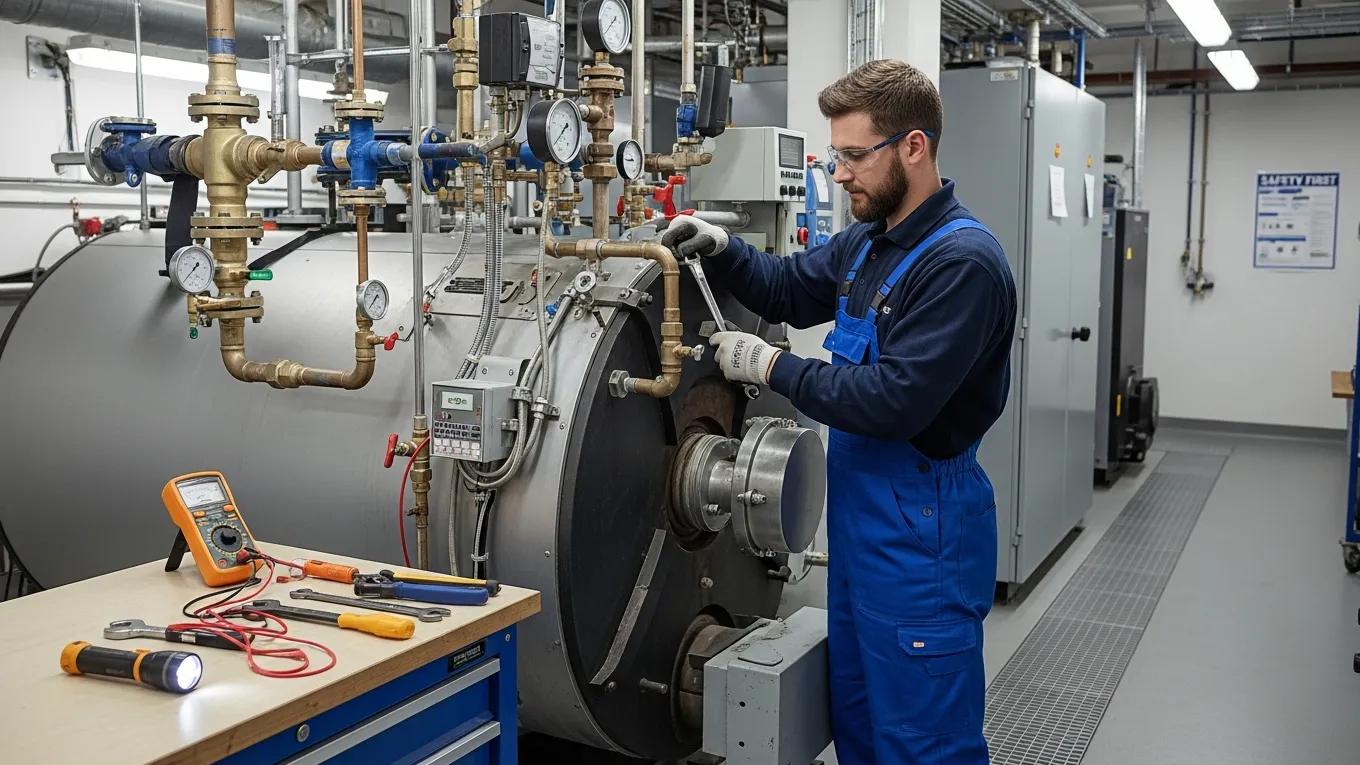
Routine service reduces emergency calls. Key tasks include:
- Inspecting the pressure relief valve
- Checking for leaks
- Flushing the system to remove sediment and restore flow
How Can Regular Maintenance Extend Boiler Lifespan?
Consistent servicing improves performance and extends life. A maintenance schedule helps you:
- Identify issues early before they require major repairs
- Maintain efficiency to lower fuel costs
- Keep the system safe for occupants and staff
How Can Troubleshooting Tips Help Identify Boiler Problems Early?
Basic troubleshooting can reveal issues and save time and money before calling a technician.
- Check Thermostat Settings
- Inspect the Pilot Light
- Look for Blockages in vents and flues
What Are Quick Diagnostic Steps for Boilers Not Heating Properly?
If heat is insufficient, try these quick checks:
- Verify thermostat settings
- Check the power supply and breakers
- Inspect for visible leaks
When Is Professional Commercial Boiler Repair Recommended?
Call a licensed technician for any serious signs or when in doubt.
- Frequent breakdowns that disrupt operations
- Safety concerns, including suspected gas leaks or CO
- Inability to maintain pressure despite basic checks
Recognizing warning signs and keeping a maintenance plan helps your boiler run safely and efficiently. For expert help, contact Youngs Heating and Cooling’s duct cleaning services, your local Walla Walla provider for HVAC, plumbing, and electrical services.
Frequently Asked Questions
What are the benefits of regular boiler maintenance?
Routine maintenance improves efficiency, reduces downtime, extends equipment life, and helps you meet safety requirements.
How can I tell if my boiler is energy efficient?
Check the AFUE rating (higher is better) and monitor fuel or energy bills for unexplained increases; older units often justify upgrades.
What should I do if I smell gas near my boiler?
Evacuate immediately, avoid using switches or phones near the area, and call your gas supplier or emergency services from a safe location.
Can I perform boiler maintenance myself?
Basic checks like reading the pressure gauge and clearing vents are fine for staff. For inspections, repairs, or safety work, hire a qualified technician.
What are the signs of a failing pressure relief valve?
Frequent pressure swings, leaks around the valve, or hissing/popping noises suggest the valve needs inspection and likely replacement.
How often should I have my commercial boiler inspected?
Have the boiler inspected at least once a year; high-demand systems or local rules may require more frequent checks.
Conclusion
Recognizing repair or replacement signs keeps your commercial boiler safe and efficient. Address noises, leaks, and pressure issues quickly, and maintain a regular service schedule to extend life and lower operating costs. For expert evaluation and service options, contact Youngs Heating and Cooling.